Pages

Sunday, 7 February 2016

What I did right... What I did wrong!

No two fires are the same.  This I am finding out.  I am trying to learn from my mistakes but it seems that each time I use the oven I correct a previous fault but find another completely new one!

Today, Cave woman built the fire up nice and hot using all the wood in one go.  It worked.  The dome turned white after only about an hour.  Hooray.  Cave Woman did notice that the cracks in the exterior of the oven appeared worse when the oven was hot.
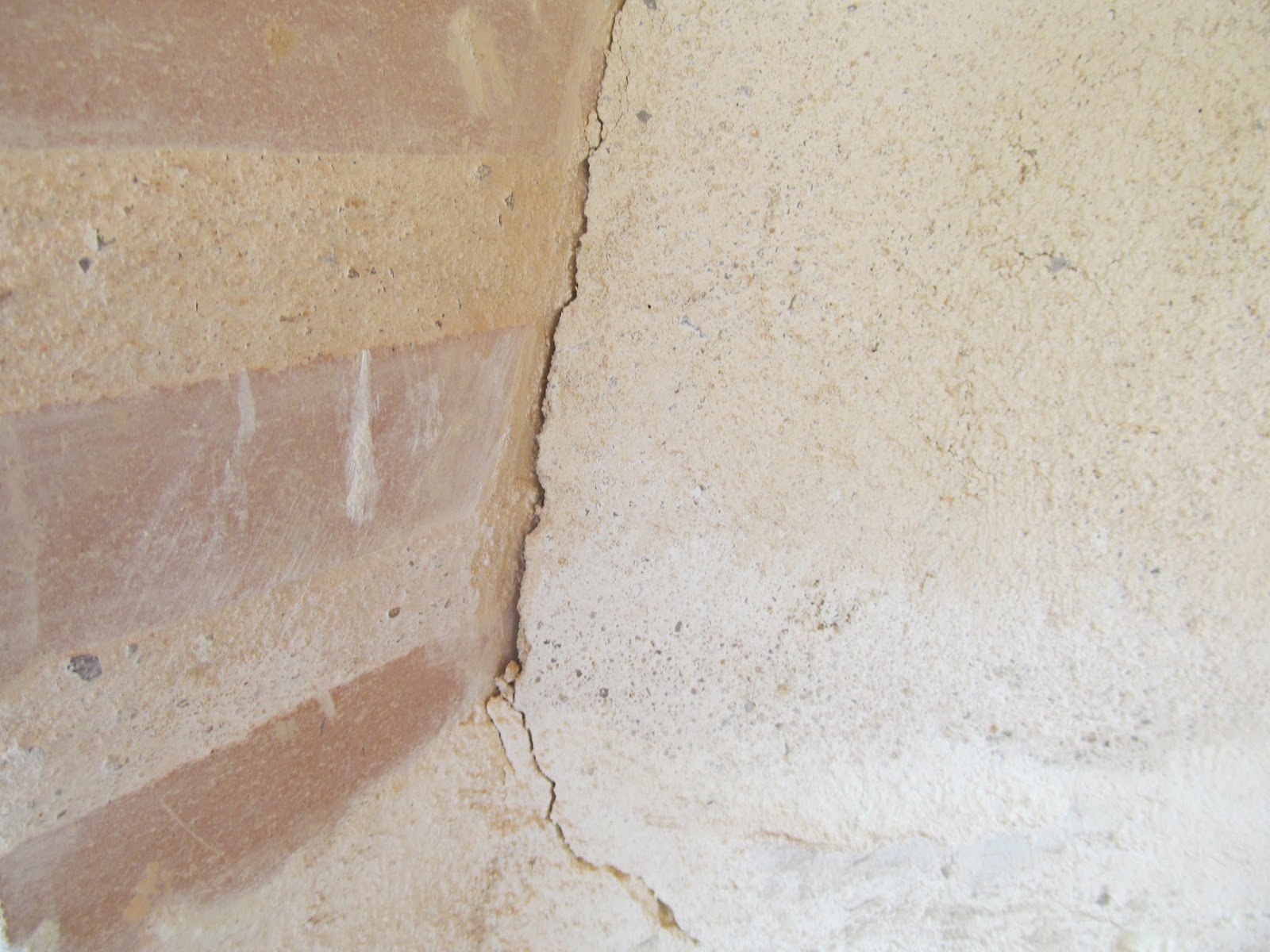


This is worrying but after a little research on the internet apparently this is normal, it can happen and many people judge the temperature of the oven by the width of the cracks as the dome heats up.


 I find this scary.  But after close investigation Man just shrugged and walked away.


The dough for bread was already rising.


Learning from previous errors Cave Woman left the glowing embers in the oven right up until the moment the bread dough was ready to be baked.


To utilise the fierce heat from the embers I baked (roasted? Smoked?) a couple of aubergines until the skin turned very very burned, and the inside was as soft as butter.


The aubergines were then left to cool in a colander before skinning and squeezing gently to remove excess moisture.


When quite cool they were whizzed up in the food processor with some olive oil, garlic, yoghurt, cider vinegar/lemon juice, salt and pepper.  This is the starter for our lunch.  And will do for snacks later.


I should really have made flat breads to go with the aubergines but I didn't remember the aubergines until after all the bread dough had been made and instead we have Bridge Rolls.


Well.  The first mistake was that I didn't wash the oven floor - because the last time I did that the oven cooled far too quickly.  But this time I did remember to close off the chimney after the embers were removed... but ... I forgot that the bridge rolls are made with egg and milk and the sugars in these are inclined to burn.


The bottoms of the rolls are a bit burned, and the top is very brown but the insides were definitely not cooked.  So Cave Woman used a cake cooling rack on the base of the oven to lift the bread up a bit and hopefully stop it burning further.  The rolls were replaced and continued to cook without browning any more.  Bread can be very forgiving.  They turned out perfectly edible, including the burned bottoms.


The newest bit of kit acquired for use with the oven is the pair of welders leather gloves.  They are a little large for Cave Woman's delicate hands but definitely do the trick.


The rest of the bread cooked in the normal 30 minutes or thereabouts time even though the thermometer on the door didn't rise above 100C.


The thermometer lies.  It never shows the correct temperature in the oven and I am learning to trust my bare hands.  A quick wave about inside the oven and I am getting to know whether it is too hot, not hot enough etc...  A laser thermometer is on the next christmas list.  The loaf from the tin had browned nicely on top but the free form loaves did not.  The reason for this is a bit of a mystery.  The dough is the same, however the free form loaves went in after the tin loaf was already half cooked... could the oven have cooled that much in that short a time?  Cheese biscuits made with herbs and sun dried tomatoes went in next.


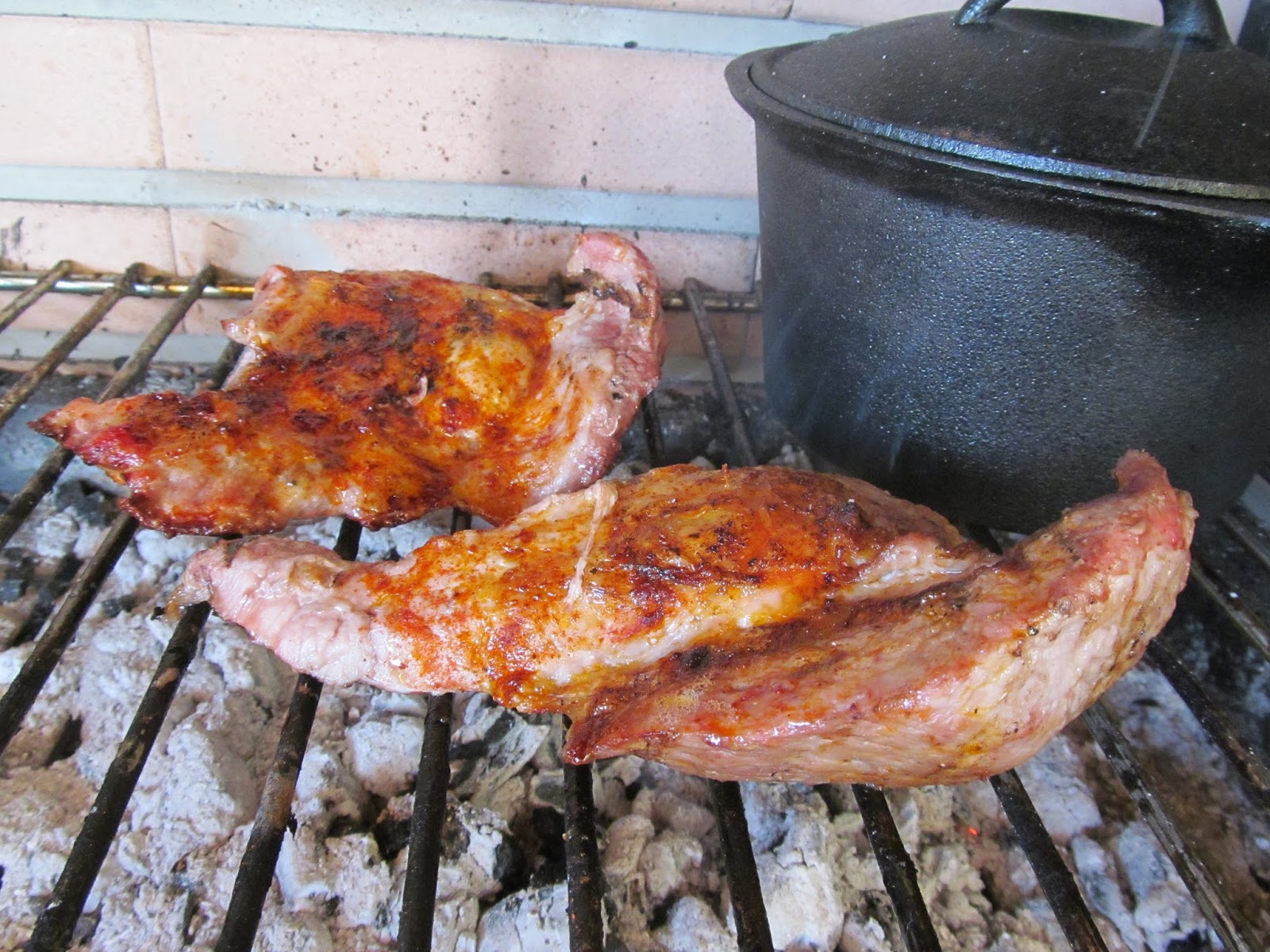
I put the hot embers on the bbq and once again we used them to cook lunch.  A couple of pork steaks sprinkled with paprika and a pot of lentils.  The aubergine and rolls were eaten as a starter.

Finally, as usual, a pot of soup is placed in the closed oven and left for several hours, it will do lunch for tomorrow along with the last of the rolls.


I have discovered that no matter how organised I get there is a point where cooking with fire becomes frantic.  Once you start loading up the oven you are constantly checking to make sure things don't burn.  If you have meat on the BBQ at the same time it is impossible to leave either to go set the table or prepare a salad... needs must share the joy of cooking with Man.  Who to his credit had barely set foot into the outdoor kitchen from the moment I claimed it as my territory, but now is happily poking and prodding and turning the meat as it sizzles.  Ah, its the little things!

Cave Woman tired.  Man happy happy happy.

Friday, 22 January 2016

Great Fire!

I am still suffering from an awful cold.  I haven't had a cold like this for ... mmm must be three years.  Hey ho.  We need bread so after having put it off for a day while I cuddled down on the couch I decided that the cold wouldn't get any worse if I actually tried to get on with stuff.  So I did.


I am learning about fire.  I am not quite so scared of lighting the fire now... I've done it a few times to date.  Adding more wood while its raging is a bit scary still but I am coping.  The trick with the fire is that you need it to burn hot.  How hot it burns varies with the type and condition of the wood you use.


I had kiln dried this batch of wood in the cooling oven the last time I used it.  So in theory it should be really dry - its already at least a couple of years old so is well seasoned.  Mediterranean oak.


I also discovered eco friendly fire lighters.  They are made from compressed cardboard and they work really well.  I got a lot of smoke at first.  And then a bit of flame Hoorah!


The flame was encouraged by use of a hairdryer.  It sort of worked.  And then when I added more wood it reverted to smoke again.  mmmmmm.


You see I figured that I need to have all the bits of wood put on the fire very early on so that they all catch alight around about the same time and it makes a BIG hot fire.  If you let some of it catch and then you keep adding more wood in small amounts it seems to retard the flames and you revert back to the smoke stage.


Well... to cut a long story short... I got the fire to go really well.  It was big and hot.  The flames shooting up the chimney and very little smoke.


And the dome turned white after only about an hour or so which is really quite quick.  I was very happy.  I had already made the bread dough before lighting the fire.  You see if your bread dough is fighting to get out of the bowl like this....


You just knock it back with a light kneading and put it back in the bowl to rise again.  This gives you roughly another hour before it needs to be baked.


Taking longer over the dough improves the flavour so you could in theory keep doing this all day long with no ill effects to your finished bread.  I expect there is a limit... but I haven't found it yet.


The embers are really hot and the oven is so hot I can't put my hand in it... this is more like it!  I love it when the dome turns back to white... it looks so clean.


Too hot for bread of course but I decide to clean it out properly and wash the floor of the oven with a cloth in water.


This will cool the oven to the temperature that I need for bread.  At least that's the plan.  I put the glowing embers into the bbq tray and later (they stayed warm for several hours) used them to cook a couple of steaks for lunch.


A short wait.  Not long.  Maybe fifteen minutes and the bread and rolls were ready to put in... but.... the oven now was really cool. Grrrrrr.  It had started to rain and the ambient temperature was quite cool but it shouldn't have made that much of a difference... should it?  I could feel the heat through the oven on the outside but inside I was able to put my hand in really comfortably for ages.  Sigh.  At some point I shall get a laser thermometer but in a perverse way I am enjoying the excitement of not knowing and just trying to use my experience to guess.  It gives bread making an extra dimension (anxiety over wasting ingredients and time is acute!)


OK so rolls that normally take fifteen minutes took half an hour and even then were a bit pale looking.  The loaves of bread took an hour.  Still very pale but cooked.  So... not perfect.  Next time I shall not clean out the oven until the bread is ready to go in straight away and I will try and do it very very quickly.


Taking advantage of the heat still in the oven I made a stew - just chopped veggies and some pork pieces, a little bit of seasoning and then topped up with stock and popped it into the oven.  It will do for tomorrows dinner.  Which was a blessing since I am still under the weather and the less I have to cook the better.


 The rolls were delicious for lunch with the steak and some green beans and bacon on the side.  A good learning day I think.  


Wednesday, 20 January 2016

An Interesting Discovery on YouTube

Woman has been cuddled up on the sofa in front of the fire with a cold and sore throat.  Today's bread making session which was going to include steak cooked in the oven has been postponed.  Instead I spent some time trawling around the internet looking for more stuff about cooking with fire.

Well!  Did I find a treat for you!  Of course part of the enjoyment I get from my outdoor kitchen is the feeling that I am learning how to cook just like great granny did.  I have a thing for history, recreating the taste and smells of days gone by is so much more powerful than reading about it in books.

Et voila!  (Where did the French come from?) This guy is really good to watch and I can't wait to try out the bean recipe for myself.  It is, almost identical to my own version of 'Boston Baked Beans' but he uses way more molasses than I ever would.  But the end result is very interestingly dark and I have a yearning to give it a go.  But that's for another time when I am well again.  For now... indulge yourselves with a little cooking with fire from an expert.


Woman making great plans. Man hungry but relieved when I said he didn't have to wear the costume!

Wednesday, 6 January 2016

First Fire of 2016

There is no bread in the house, I made a quick soda bread to keep us going using the indoor oven, but then planned a day off from the Olive harvest to get a few loaves done.  (it was also a very welcome rest from the aches and pains of harvesting).

The day dawned very cold - 6C - I know that isn't so cold compared to some places but its chilly for Cavewoman and the oven.  Sadly the wood was damp.  Everything felt damp.  A lesson we thought we had already learned obviously needs reinforcing.  A good fire needs good wood.  Note to self... start the day before and sort out some decent wood ready for the following day.


So... with the fire going very slowly indeed I had to knock back the bread dough more than once to delay its readiness for the oven.


The day continues very miserable and grey.  I don't want to go inside and leave the fire, it might just die on me.  But we haven't had breakfast yet and Man is already out working hard on the olive harvest.  So.  Have you ever seen one of these?


This came with the finca when we bought it.  It had never been used judging by the nice clean dry wicks.  It runs on paraffin so is incredibly cheap to use.

Breakfast for the Man (who is working hard) and the Woman (who is fretting over the slow fire in the oven).  And an opportunity to use more of the cast iron cookware bought especially for this kind of thing.


The first egg stuck on the bottom of the pan but the rest were fine.  Cast iron is like that, it takes a few goes to get it working just right.  And when breakfast is over and the pan has cooled down, a scrape with a metal slice and then a wipe out with kitchen roll and the pan is ready for the next time.  I love it... no washing up!


The fire continues to be of concern.  It will not get hot enough and if I add more wood that seems to retard the process of 'whitening' the oven dome.


I think the big log is too big.  Having watched the Victorian Bakers on UK tv last night and seeing that they use bundles of faggots (little thin sticks) to get their oven up to temperature, I think small fast burning (hot burning) wood is the way to go.  I wasn't prepared for this so when next we are sorting the wood store we shall have to cherry pick some pieces specifically for the oven.  Who knew that it was going to be this complicated? Actually Woman knew but experiencing it is a bit different.

In the meantime... lunch has to be thought of.  Two very large potatoes are pierced with a skewer and then wrapped in a loose foil package.  Loose because they are still damp from being scrubbed clean and I want space in the package for them to steam slightly.  The oven is taking far too long to get up to temperature so I popped the potatoes in while the fire is still raging.  Hope they don't burn.  Hope they cook.

Once again the bread dough is ready but the oven isn't.  Determined not to have a failure - such a waste of ingredients (and we have no bread in the house so needs must) I closed the oven door to quench the fire and crossed my fingers that the oven was hot enough.  The roof of the oven is still black, it has only just started to turn white and closing the door of the oven has meant clouds of black smoke rising up to the top of the dome and turning it black again.  I know... you are not supposed to cook with the oven dome black with soot... but what can I do?  We have no bread in the house!

The issue now will be... how long to give the bread?  I have rarely given my bread more than half an hour to cook but on the Victorian Bakers they left their loaves for a full hour.  Perhaps with the oven temperature lower that would work... they also threw a glassful of water into the oven... I know that it produces steam that helps the bread to rise but it also cools the oven and I could only do that if it was really really hot.  I haven't tried that yet.

The tin loaves were left in the oven for almost an hour.  I turned them after 20 minutes.  The free form loaf was also in there for an hour but it didn't colour as much as the others.  It is cooked but its a bit pale - it won't be as good.

The potatoes were transferred to the estufa oven... after more than an hour in the bread oven they were as hard as when they were first put in.  Now usually I will zap a baked potato in the microwave first before finishing it off in an oven... I didn't do this but it just goes to show that baking potatoes from raw takes a very very long time.  Or a hotter fire.    Lets face it, everything takes a hotter fire.  THE FIRE MUST BE BIG AND HOT.  All is not lost.

Macaroni cheese is quick to prepare and a couple of apples in the top of the estufa take only 20 minutes to bake.  The potatoes will be ready by this evening (woman crosses fingers).


I think I have dropped the ball a bit with the bread oven.  I started thinking it was easy.  Of course it is if you pay attention and do it right.  The first fire I did was sooooo hot.  I haven't really had as good a fire since.  Mmmmm.  Woman philosophical.  Man still hungry.


Wednesday, 9 December 2015

Seasoning a Cast Iron Pot

Some cast iron pots that you buy come pre seasoned.


My set which includes the dutch oven has been pre seasoned and silly me, I forgot all about seasoning when I decided to use the mini cauldron for the first time... with disastrous results.


In more ways than one.  The handle broke the instant it came out of the oven.  What the....???


The inside was well and truly rusty once I cleaned out the iron tainted soup.  Historically the cast iron pots were responsible for topping up the iron intake in the populations perhaps less than ideal diet.  Not a bad thing really when you think about it.  But they did understand how to season their pans and would never have made the mistake I did.

So.  What is seasoning?  An unseasoned cast iron pan is prone to rust.  Food is inclined to stick to it and it can taint the food with a metallic taste (ask me how I know?)  The process of seasoning will give it a virtually non stick coating that protects the food from the 'raw' cast iron and also stops the food from sticking.  Minute traces of iron do still enter the food but nothing harmful.


and so.  How do you season a cast iron pan?  First you clean it with soapy water.  If it is already rusty then you need to scrub off the rust.


This is easily done with a raw potato cut in half and a handful of salt.  A little hard scouring and the rust comes right off.  Well normally this is very easy but the shape of my pot made it very tricky indeed.  This should be the only and the last time you ever use such a rough method to clean the pot.


After the pot is clean.  You must dry it thoroughly.  Once dry you coat it with an edible oil or lard and then you bake it in a hot oven.  The idea is... that the oil or lard (actually I think lard is best but all I had was olive oil) bakes on to the metal giving the pan a protective coat.  You are advised to cook bacon or fried food in the pan several times to increase this protective layer... only wiping the pan with kitchen roll or a dry cloth between uses.  Now this is fine if you are talking about a frying pan.  But this is a cauldron.... I was thinking of cooking stew or soup in it... not frying bacon.


Anyway.  The fire is lit.  The oven is hot.  The cauldron is coated in oil - both inside and out because I read somewhere that sealing the outside is also a good idea???? who knows????


Am I going to fry bacon in it tomorrow?


I don't know.  It was really hard to clean because of the shape of it and I scratched my hands and rubbed them with salt something terrible until I had to stop because of the stinging.


I am not convinced that it is clean enough.  I might bake it a few times with lard before I try putting food into it again.


There must be a way to protect it.  Macbeth's witches were stirring a potion intended for human consumption after all.  I can't believe any witch worth her salt would have tainted the batch by using a non seasoned cauldron!

Woman with hands stinging and red.  Man looking at the Ikea kitchen section online.